
Annealing & Normalising
Softens metal and relieves residual stress so the material becomes workable again.
Go to application →
Precision · Efficiency · Control
Induction heating is used across a wide range of industrial processes — from bolt heating, brazing and hardening to welding and melting. Heat is generated inside the workpiece itself: fast, measurable and without contact.
All Applications
Softens metal and relieves residual stress so the material becomes workable again.
Go to application →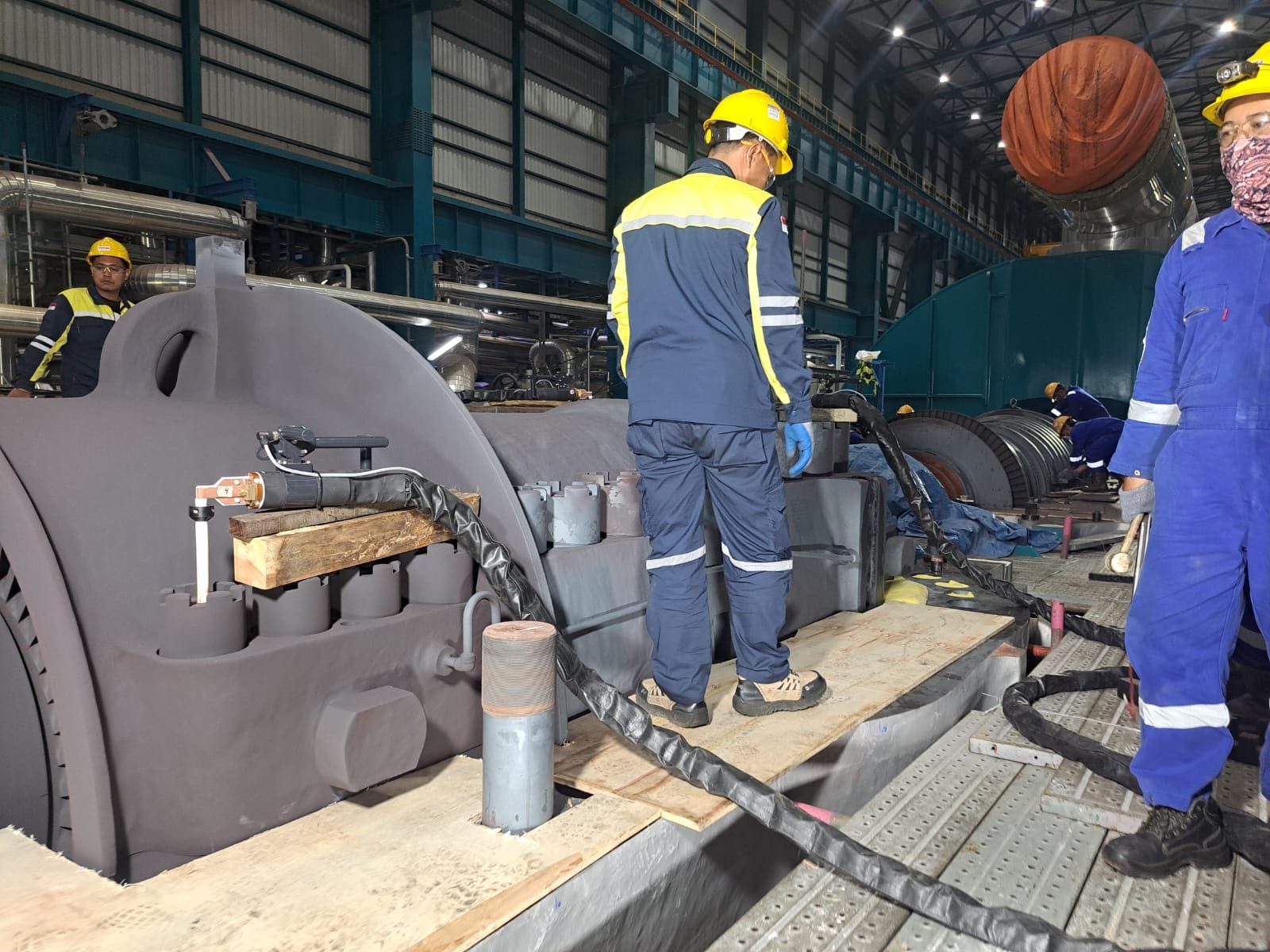
Expands large bolts so they can be tightened or released precisely, without an open flame.
Go to application →
Activates adhesive between two components with short, targeted heat.
Go to application →
Joins two metals using a filler alloy, without melting the base material.
Go to application →
Heats billets evenly to forging temperature before they are shaped under pressure.
Go to application →
Hardens a component surface for wear resistance while the core stays tough.
Go to application →
Melts metal in a crucible with controlled temperature and natural stirring.
Go to application →
Strips paint and coatings from steel without chemicals or abrasive blasting.
Go to application →
Heat treatment after welding to relieve residual stress in the joint.
Go to application →
Warms material before welding so that cooling does not happen too quickly.
Go to application →
Expands the outer component so it can be fitted, then grips as it cools.
Go to application →
Straightens buckled plate and sections with controlled local heating.
Go to application →
Reduces brittleness after hardening so components do not fracture.
Go to application →
Joins pipe and tube edges continuously on high-speed production lines.
Go to application →
Heats continuously moving wire for annealing, drying or coating.
Go to application →No applications for that industry.
Tell us the material, dimensions and target temperature — we will help define the right method.